
Microfluidic POCT: Principles, Workflow and Applications
Microfluidic POCT: Principles, Workflow and Applications
Microfluidic point-of-care testing (POCT) uses small volumes of fluid to perform tests close to the patient. This overview explains how reagent-disc chemistry systems work and what to consider when using them.
What Is Microfluidic POCT?
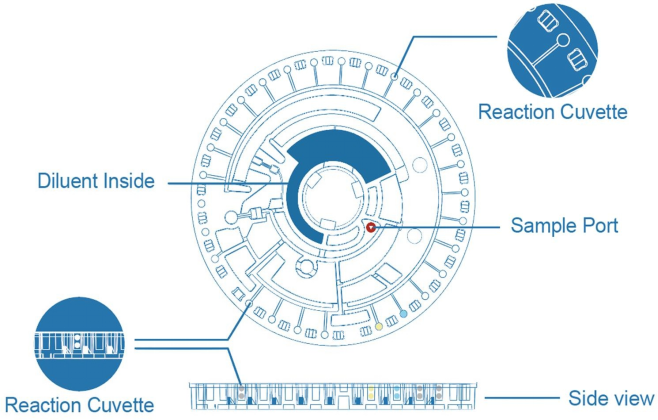
Microfluidic systems guide small amounts of fluid through channels and chambers. In chemistry testing, a reagent disc can bring several steps into one consumable.
For example, a disc may support sample separation, fluid mixing and chemical reactions. The analyzer controls the process, measures the reactions and reports the results.
However, features vary by product. Always check the instructions for the analyzer and reagent disc.
How Does the Testing Process Work?
In a centrifugal system, controlled rotation moves fluids through the disc. The exact process depends on the disc design.
1. Prepare the Sample
First, collect and prepare a suitable sample. Follow the reagent instructions for sample type, handling and volume.
2. Load the Disc
Next, add the required sample and load the disc into the analyzer. Some disc types need extra preparation.
3. Review the Results
Finally, review the results, quality-control information and instrument flags before interpreting the findings.
What Should You Consider When Choosing a System?
Start with the tests you need. Then check:
- Available test panels and measurement ranges.
- Accepted sample types and preparation requirements.
- Testing time and expected workload.
- Operator training and reporting options.
- Quality-control and maintenance requirements.
Instrument analysis time is only part of the workflow. Sample collection, preparation and result review also take time.
Human and Veterinary Testing
Human and veterinary testing have different requirements. Choose products that match the intended use.
For veterinary testing, also confirm the supported species and relevant reference information. Do not assume that one product’s specifications apply to another model or test panel.
Quality Control Still Matters
An integrated workflow does not remove the need for quality management.
Follow the instructions for reagent storage, calibration, quality control, cleaning and maintenance. In addition, review instrument flags and sample suitability alongside the clinical information.
Explore MNCHIP Chemistry Systems
Celercare™ M5 and Pointcare™ M4 use microfluidic reagent-disc technology for clinical laboratory and point-of-care settings.To learn more, explore the product pages and check the applicable operator manuals and reagent instructions.
This article provides general technical information. Refer to the applicable instructions for product operation and limitations.
Medical
2022 Medlab Asia & Asia Health
Booth No: 5. B56
2022 Africa Health
Booth No: 2. A13
2022 Medica
Booth No: Hall 3 / B45
2023 Medlab Middle East
Booth No: Z6. E45