
IN VITRO DIAGNOSTICS
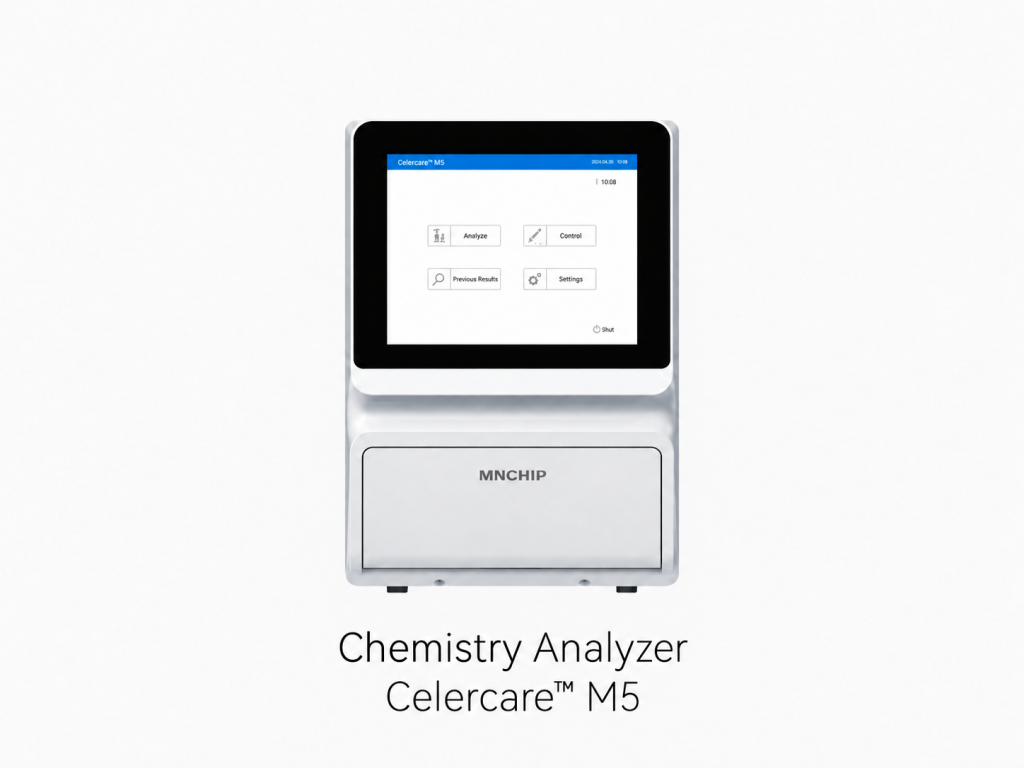
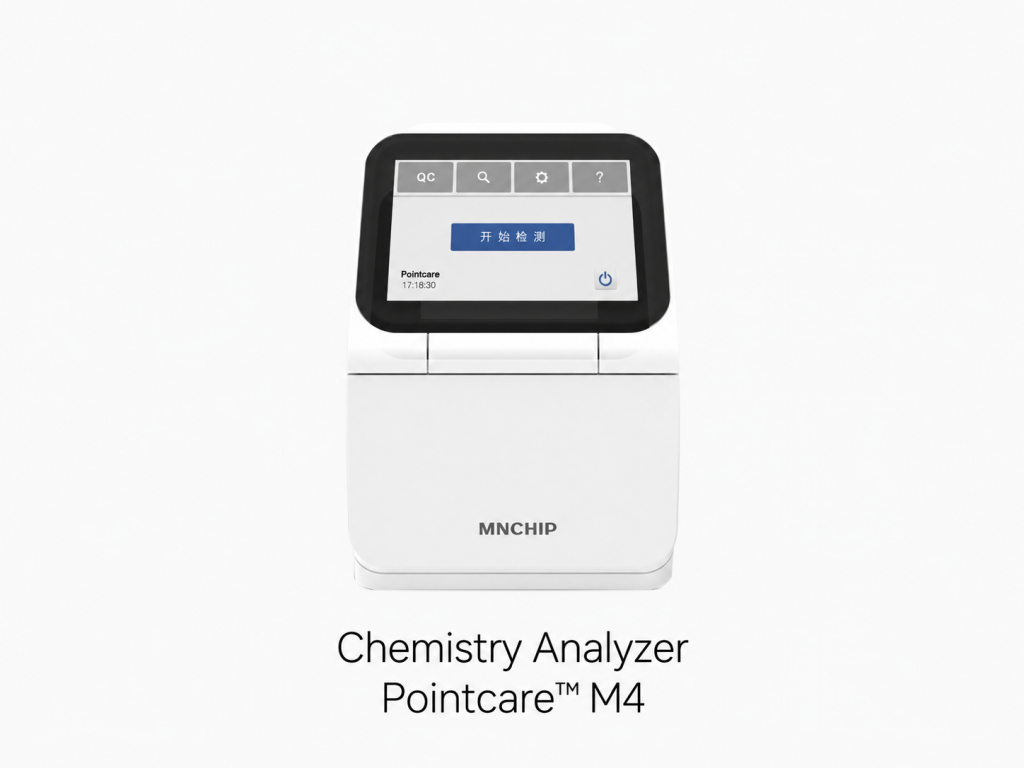
MNCHIP provides clinical chemistry testing solutions for clinical laboratories and point-of-care testing (POCT) settings through the Celercare™ M5 and the portable Pointcare™ M4. Built on microfluidic technology and using disposable reagent discs, both analyzers support quantitative clinical chemistry testing through a streamlined workflow, from sample loading to result reporting.
Celercare™ M5 — Chemistry Analyzer
Designed for routine clinical laboratory testing, the Celercare™ M5 features an 8-inch color touchscreen for intuitive operation and clear result viewing. Its built-in thermal printer enables immediate printing of test reports without the need for an external printer.
Pointcare™ M4 — Portable Chemistry Analyzer
The Pointcare™ M4 features an ultra-compact, lightweight design, making it ideal for space-constrained settings. Measuring 210 × 125 × 175 mm and weighing approximately 2.5 kg, it is well suited for point-of-care testing and decentralized clinical testing environments.
Shared Microfluidic Technology and Key Features
Microfluidic Detection Platform: Disposable reagent discs integrate key analytical processes, including sample separation, dilution, mixing, and reaction preparation, as applicable to the specific reagent disc. The analyzer automatically performs photometric measurements and calculates test results.
Sample Volume and Testing Time: A sample volume of 100 µL is required. Compatible sample types include lithium-heparinized whole blood, plasma, and serum, subject to the applicable reagent instructions. The typical testing time is approximately 12 minutes, depending on the reagent disc and sample type.
Data Connectivity: Supports LIS/EMR connectivity and integration with the MNCHIP Medical Data Management Platform (MMDMP), subject to the applicable interfaces and system configuration.
Calibration and Quality Control: QR codes on reagent-disc packaging contain lot-specific information, including calibration data. The system supports calibration and quality-control procedures in accordance with the applicable reagent instructions.
Simple Workflow: A streamlined three-step process — add the sample, insert the reagent disc, and review or print the results.